



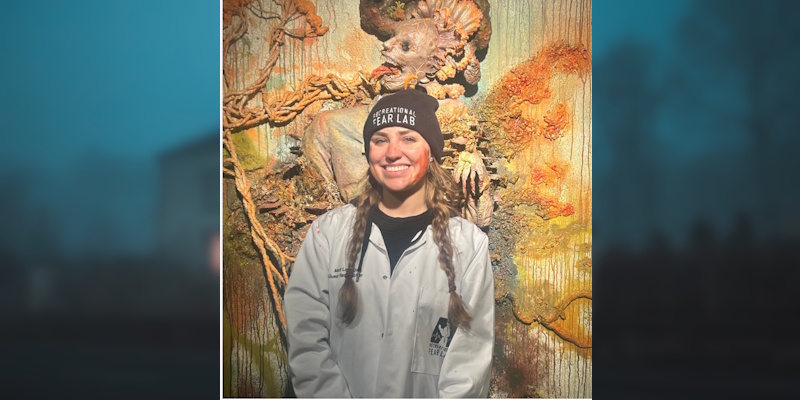
A Memorial University graduate student is conducting research to see if house of horror-type jump scares and gory scenes can be used to gain a better understanding of how the brain processes real-world trauma.
Madi LaSaga and a team of students supervised by Dr. Jonathan Fawcett and Dr. Chris Quinn-Nilas specialize in measuring recreational fear and its application to human memory.
LaSaga and her team developed and validated a Severity of Horror Media-induced Intrusive Memories scale – and they’re using a haunted house to test it out.
The researchers found that scores predicted the frequency and distress of intrusive memories following a haunted house experience, and that horror fans scored significantly lower than non-fans.
She’s hoping that by examining how people regulate their thoughts, emotions and physiological responses during and after horror movies or haunted houses, they will identify factors that influence resilience to things like post-traumatic stress disorder following a traumatic experience.


